News
Skid-Mounted and Pontoon Slurry Pump Stations: Complete, Ready-to-Run Solutions
A skid-mounted or pontoon slurry pump station combines the pump, driver, base frame, piping, valves and controls on one factory-assembled and tested unit. It suits mining dewatering and dredging.
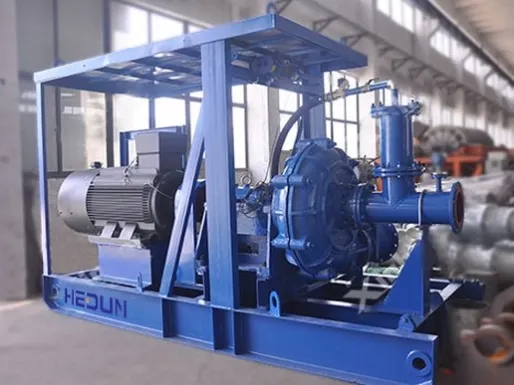
A slurry pump rarely works alone. On a mine site, a dredging pond or a sand washing plant, the pump needs a driver, a base, pipework, valves and controls. An integrated slurry pump station puts all of that onto one steel skid — or onto a floating pontoon — in the factory, so the unit arrives on site ready to connect and run. Several customers in Indonesia have already enquired about this type of station for mine dewatering and dredging. This article explains what a station includes, the difference between skid-mounted and pontoon designs, and how to specify one.
What is an integrated slurry pump station?
An integrated slurry pump station is a complete pumping package built around a horizontal centrifugal slurry pump. Instead of buying the pump, motor, base and pipework separately and assembling them on site, everything is mounted, aligned and tested in the factory before delivery. The station may be built on a fixed steel skid that sits on the ground, or on a pontoon that floats on a pond, pit or river. In both cases the idea is the same: the customer connects the suction and discharge pipes and the power supply, and the station is ready to run.
What a typical station includes
- Slurry pump: a horizontal centrifugal pump, usually from the AH series, sized for the required flow and head.
- Driver: a diesel engine or an electric motor, belt-driven or direct-coupled.
- Base frame or pontoon: a steel skid with anchor points and lifting lugs, or a floating pontoon structure with a pump well.
- Pipework and valves: suction and discharge lines, bends, valves and flanges as agreed, with access for maintenance.
- Controls: motor starter, control panel or engine control, level switches and alarms where required. The exact scope is agreed before production, so the station matches the site.
Skid-mounted or pontoon?
A skid-mounted station is the simpler option. The skid sits on prepared ground beside a pond, sump or tailings dam, and the pump is fed by a suction pipe or a short suction lift. A pontoon station floats on the water itself, so the suction line is short and the pump is close to the slurry. The pontoon design suits pond dredging and pit dewatering where the water level moves, and where there is no good ground for a fixed skid.
Why choose an integrated station?
- Faster commissioning — the unit is assembled, aligned and tested in the factory.
- Easier relocation — a skid station can be lifted onto a truck, and a pontoon station can be towed to another pond.
- Less civil work — a flat, compacted pad is usually enough for a skid, and no pump house is needed.
- One supplier, one responsibility — pump, driver, base, piping and controls all come from HEDUN.
Diesel engine or electric motor?
Most fixed stations use an electric motor, because it is quieter, cheaper to run and easier to control. Diesel engines are the answer where there is no reliable mains power, or where the station must move between sites. A diesel unit needs a fuel tank, a radiator and a battery, so it is heavier and needs refuelling on a schedule. HEDUN supplies both, using the same pump end.
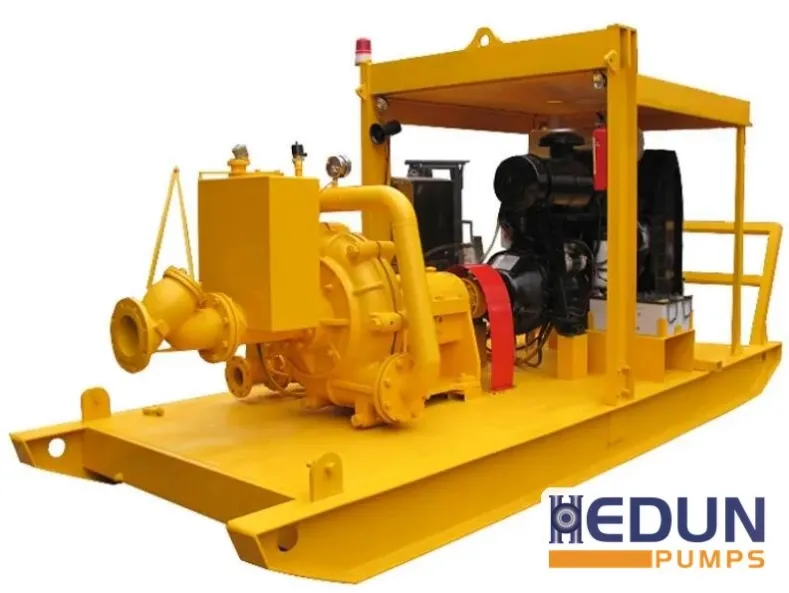
Diesel-driven skid pump unit.
Where pump stations are used — including Indonesia
Skid stations are used for mine dewatering, tailings transfer and sand washing, wherever a pump must be moved from time to time. Pontoon stations are used for pond dredging, river sand suction and pit dewatering, where the water level changes and the pump must follow it.
Interest in integrated stations is growing in Indonesia, where mines, sand operations and dredging projects often work away from the grid. A diesel-driven station on a skid or pontoon can be delivered to a remote site, connected to the suction and discharge lines, and put to work without building a pump house or waiting for a power connection.
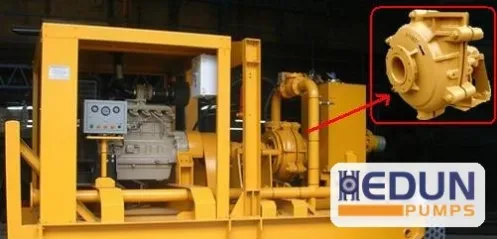
Diesel-engine slurry pump set in Indonesia.
How to specify a slurry pump station
To quote a station, HEDUN asks for the following information:
- Slurry type and solids — what is being pumped: tailings, sand, coal slurry, ash or dredged material.
- Duty — required flow and total head, or the size of the pond or pit and the distance to discharge.
- Suction conditions — suction lift, suction pipe length and whether the pump will prime itself or needs a priming system.
- Driver preference — diesel engine or electric motor, and the available power supply.
- Site conditions — ground conditions, climate, access for delivery and any lifting limits. Send the duty details and HEDUN will recommend the pump model, the driver and the station layout, and quote.
Summary
A skid-mounted or pontoon slurry pump station turns a pump into a ready-to-run package. The pump, driver, base, piping and controls are assembled and tested in the factory, so commissioning on site is quick and moving the unit later is easy. For mines, sand plants and dredging operations — including remote sites in Indonesia — it is a practical way to get a reliable slurry pumping system without building a pump house.
WARMAN® is a registered trademark of Weir Minerals. HEDUN is not affiliated with or authorised by Weir.